

by
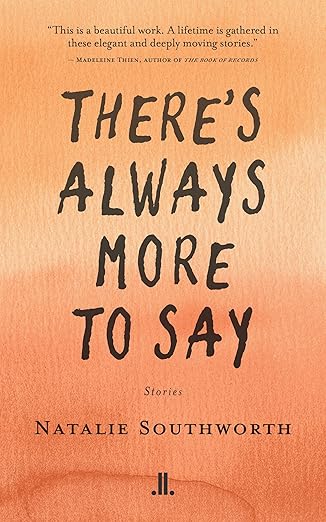

In the title story of Natalie Southworth’s debut collection, sisters sneak out of their unstable mother’s apartment to find “reality,” an experience with lasting repercussions. Southworth concentrates on moments like this—moments of disconnection, family fragility, and unexpected expressions of love.
The stories that make up There’s Always More to Say focus on characters struggling to achieve what they think they should want despite the demands and loneliness of our times. A puppeteer attempts to reinvent himself as a realtor. Preteen girls strive to become like their absentee fathers. A nanny must decide between her future or that of the family dog. A high-achieving working mother is imprisoned by her antidepressants.
Infused with humour and verve, yet full of warmth, Southworth interrogates the quest for more and what it means when ambition clashes with private reality.
With that we were children again, Rachel, age thirteen, reaching for my hand, pulling me, flying down the sidewalk, past where our parents’ car gradually, like a hearse, approached. Our mother sat in the passenger side, our father behind the wheel, on their way back from her first stay in the mental hospital. I didn’t stop to look closely but hightailed it with Rachel. We ran through the narrow squeeze between the neighbour’s house, into our yard and opened the aluminum storage shed, where we sat on the floor.
“You don’t want to kiss her,” Rachel said, wiping her lips with the back of her hand in a show of disgust, as if our mother’s frailty would soak through.
READ MOREFrom her pocket, Rachel pulled out a small orange, what my mother called a satsuma, and laid pretend plates at our feet. We were dryads, farmers, astronauts. Sometimes mothers. We sat in the shed when our parents argued, when our mother slept for days and our father was dazed with worry. When rain fell hard on the roof and the summer storms lashed the electrical wires, we sat side by side in the shed, which wasn’t so much a hideout from the world, but a hall for victors, toasting after battle.
COLLAPSELynda Williams on The New Quarterly wrote:"There’s Always More to Say is a beautiful debut collection of stories from English-born Montreal author Natalie Southworth.
The nine stories within are filled with ache and grace, often naming (without shaming) the toll that untreated and/or undiagnosed mental illness takes on families, and the fractured realities that youth in these upbringings are left to navigate on their own.
Already this summary is no match for the elegance of the collection, which blends a delicacy and clarity with dignity in its portrayals of nuanced shifts in sanity."
Read full review by clicking on the review link.
"Natalie Southworth’s debut story collection, There’s Always More to Say, is not what the back-cover copy led me to anticipate. Although not officially a linked collection, the book features three anchor stories with sisters Cora and Rachel, who struggle to cope with the impact of their mother’s mental illness at various stages of their lives. Southworth’s work engages with a range of themes, including loss, family relationships, and disappointment, but to highlight these without mentioning the book’s most triumphant theme seems like an oversight."
Read full review by clicking on the review link.