

A Heart Surgeon's Journey Through Purpose, Pain, Conviction, and Healing
by
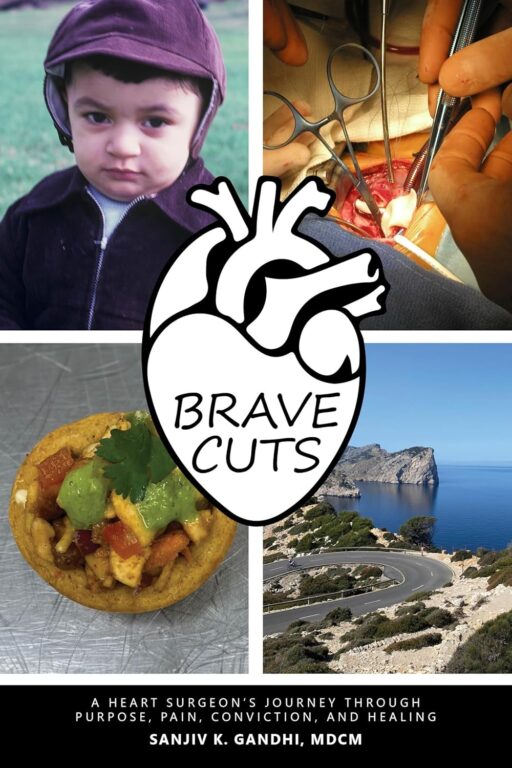


Dr. Sanjiv K. Gandhi spent decades working inside operating rooms where children’s lives literally hung in the balance. In this brave, unflinching memoir, he opens up about the scalpel-edge decisions that defined his career as a pediatric cardiac surgeon, the personal losses that transformed his path, and the convictions that pulled him from the surgical suites into the political spotlight, only to be cast into the darkness again.
From his childhood in small-town Nova Scotia as the son of immigrant physicians to the operating rooms of North America, Africa, and beyond, Gandhi takes readers inside a life shaped by resilience, precision, and purpose. Along the way, he shares extraordinary stories of patients whose courage taught him as much as any mentor and of personal losses that reshaped how he defined success, fatherhood, and compassion. Interwoven throughout are recipes that honour his family, reminding us that food, like surgery, is an act of love.
But this is more than a surgeon’s memoir. It is also a searing critique of the systems meant to safeguard public health. With candor and urgency, Gandhi challenges us to reconsider how we measure success, how we value care, and how we can make medicine more humane.
What I cannot adequately describe through simple explanations of anatomy and physiology is the elegance, beauty, and magic of congenital heart surgery. In a later chapter, I’ll talk a bit more about my nurse practitioner, Lisa, in Pittsburgh, from whom I learned so much. She made it a habit to accompany me from the operating room to talk with the parents postoperatively. Many times, she would come to the OR early, stand next to the anesthesiologists at the head of the table, and just watch. She thought every young nurse who cared for postoperative cardiac patients should be required to do so, not necessarily to learn about disease processes or the operations but to appreciate the splendour and magnitude of what happens behind those operating room doors every day. She called it the “awe factor.” From the first time I saw a beating human heart to the last case I did, I never lost that awe factor.