

A Young Man’s Journey Through Addiction
by
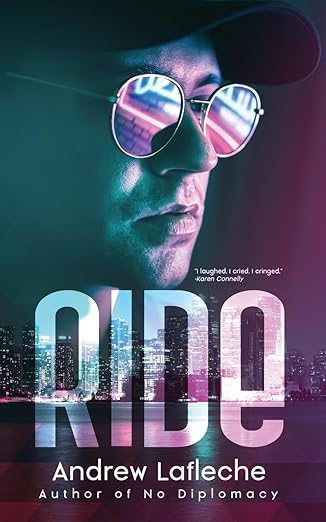



Ride possesses an unnerving air of documentary reality that’s heartbreaking and authentic at the same time. This searing novel is a dizzying spiral of desperation set in the early 2000s in St. Catharines, Ontario. High school is over, an ex-girlfriend is pregnant, and Troy Brinkman is losing control. Having just moved out of his parent's home, Troy enters a landscape of limitless moral entropy where everybody drinks copious amounts of alcohol, snorts mountains of cocaine, and swallows as many Ecstasy pills as they can get their hands on.
When he's not seething for his next high, Troy cruises parties, strip-clubs, and bars for action in a desperate attempt to avoid coming to terms with his best friend's attempted suicide. In this binge-life, Troy recognizes his impending doom and tries to renew feelings for his ex-girlfriend, Danielle, his sole through-line that connects Troy to who he was before his habits became him. It's this struggle which threatens to get the better of, consume, and ultimately destroy his dreams.
Ride is the millennial’s contemporary version of the classic 1960s counterculture novel, an authentic, unrelenting, and strangely exhilarating episodic group portrait of blasted lives. Readers will catch familiar whiffs of the nihilism and loneliness in the darkest writings of Thompson, Bukowski, and Jack Kerouac in Lafleche’s gritty ‘sex, drugs, and rock ’n’ roll’ world of excess, self-gratification, and black comedy.
After Casey showed up to school with a casted arm, his dad laid off him for a while. Once Casey’s arm healed, though, the bruises became a regular accessory. He’d come to class Monday mornings with cuts on his forehead. He’d sport black eyes and fat lips. In gym class you could see the bruises on his thighs.
At first nobody said anything. Teachers turned a blind eye to his beat-up body assuming he was just another trouble maker. By the time you reach high school your size should have forced your dad to think twice before raising a hand to you. For Casey, though, this is when it started. Nobody suspects child abuse at that age. If it’s even still called child abuse.
Eventually the bruises assumed Casey as identities always do. If Casey didn’t have a bruise people looked at him like they look at someone who switched from wearing glasses to contact lenses. It became that if his nose wasn’t bloody or his lip wasn’t split, he didn’t look like Casey.
Showing up this way earned him a reputation as being a punk. He should have been treated like a tough guy, looking beat up the way he did, like all those guys in Fight Club, but he wasn’t. Instead of confronting him about his wounds, the kids made up a story. It didn’t matter if it was true, it just had to fit. Forget learning in ninth grade science that correlation doesn’t imply causation, they had their story, and everybody assumed it was the gospel truth.
COLLAPSEKirkus Reviews on Kirkus Reviews wrote:"Andrew Lafleche is an honest and courageous writer. There is an eyes-wide-open accuracy to his work, no matter the subject matter. Hemingway once said of writers he admired: 'They're true gen, ' meaning they were the genuine article, writers he considered incapable of deceit, and incapable of playing dumb. Andrew is a True Gen writer."
"The memories kicked up by this trip lead Troy on a bender of extreme and violent proportions-he robs drug dealers, ruins friendships, and fills his system with whatever chemicals he can. As he self-destructs, he tells himself to just "enjoy the ride," but that may be because he doesn't realize the dark places that the ride will take him. Lafleche tells the story in Troy's own voice-a caustic blend of casual slurs, teenage id, and affected nihilism-and the novel as a whole fits very well within the tradition of transgressive literature."